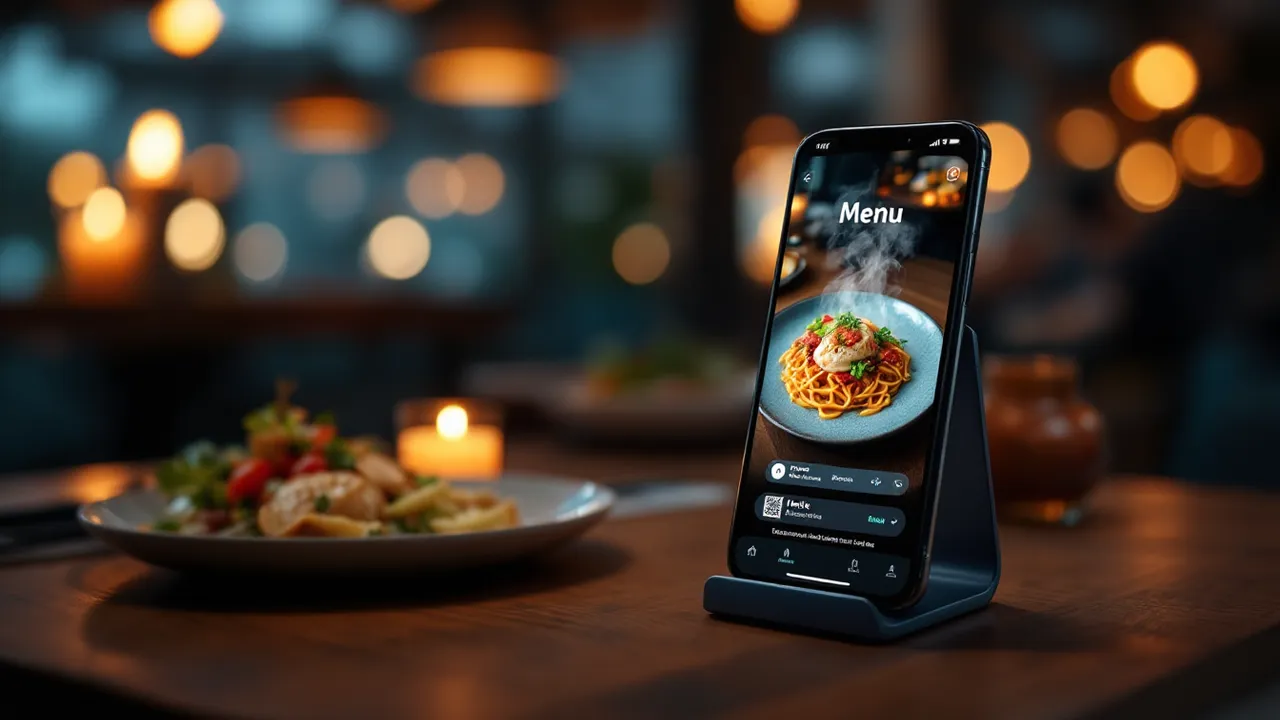
QR Code Menus That Sell: How Video and AI Turned a Pandemic Stopgap into a Revenue Tool
Why first-generation QR menus failed, how vertical video and AI change the economics, and how to pick a digital menu platform that pays for itself.
The Menu Nobody Misses
The QR code menu has a reputation problem, and it earned it honestly. During the pandemic, restaurants needed a contactless menu overnight, so most of them did the fastest possible thing: uploaded a PDF of the printed menu and taped a QR code to the table. Guests scanned, squinted, pinch-zoomed through a three-column document designed for paper, gave up, and asked the server for a real menu. When dining rooms reopened, many restaurants quietly retired the codes — and plenty of guests cheered.
But writing off the QR menu because of the PDF era is like writing off e-commerce because of dial-up. The stopgap version deserved to die. What replaced it in the last few years is a different product entirely: a menu built for the phone in the guest’s hand, with video instead of static text, ordering and payment built in, and — this is the part that changed the economics — AI doing the content work that used to make digital menus impractically expensive for independent restaurants.
This article walks through what separates a digital menu that sells from one that annoys, what the technology actually costs to run, and how to evaluate platforms if you are considering the switch.
Why First-Generation QR Menus Failed
The PDF-behind-a-QR-code failed for reasons worth understanding, because they define what a good implementation must fix:
-
It was designed for paper. A printed menu’s layout — columns, small type, dense sections — is hostile on a 6-inch screen. Guests spent their first minute fighting the interface instead of getting hungry.
-
It subtracted value instead of adding it. The printed menu at least worked. The PDF version did nothing paper could not do, while adding friction: a scan, a load, a zoom. Technology that only replaces should at minimum match the experience it replaces; this did not.
-
It was static in a medium built for motion. Phones are where people watch video. Handing someone a phone experience with no imagery — or a single low-resolution photo per dish — wastes the one advantage the screen has over paper.
-
It ended at the menu. The guest still had to flag down a server to order and again to pay. All friction, no payoff.
The lesson is not “guests hate QR menus.” It is that guests hate worse menus, whatever the format. The current generation of digital menus wins where it is genuinely better than paper: showing the food, taking the order, and settling the bill.
What Changed: The Menu Learned to Move
The most visible shift is video. Modern digital menus lead with short vertical clips of each dish — steam rising, sauce being poured, a fork pulling apart something tender. The format is not an aesthetic choice; it borrows the grammar guests already know. Billions of people now spend part of every day watching 9:16 vertical video on TikTok, Reels, and Shorts, and that habit transfers directly: a dish presented as a short vertical clip gets attention that a text line item never will. (We have written before about how short-form video became the discovery layer for businesses in general — the restaurant menu is the same trend arriving at the table.)
Appetite is visual. Menu psychology research has said for decades that imagery drives selection — it is why fast-food chains put photographs on menu boards and why food advertising is essentially the craft of making dishes move appealingly on camera. Video simply does what a photograph does, harder: it shows texture, portion size, and freshness in a way that removes the guest’s uncertainty about what arrives at the table. Uncertainty is what suppresses ordering; guests skip dishes they cannot picture and default to the safe familiar item. Reduce the uncertainty and the adventurous (and usually higher-margin) items start moving.
The industry data points the same direction. The National Restaurant Association’s research has tracked steadily rising guest expectations for digital convenience — browsing, ordering, and paying by phone — and Deloitte’s restaurant-of-the-future studies consistently find that a large share of guests prefer digital ordering channels and spend more when using them. Operators see the mechanism up close: a menu that shows the food and lets guests order the moment the craving hits captures impulse decisions that die waiting for a server.
AI Removed the Content Bottleneck
Here is the objection every restaurateur raises at this point, and it used to be decisive: who is going to produce all this content? A professional food videographer charges real money, dishes change seasonally, and a 60-item menu means 60 shoots. For a decade, that math kept rich digital menus in the domain of chains with marketing departments.
That math broke in the last two years. Generative AI now handles the three content jobs that made digital menus expensive:
-
Dish imagery. Image models can turn a decent phone photo of a plated dish into a clean, well-lit, appetizing shot — consistent lighting and styling across the whole menu, without a studio. Where no photo exists at all, current models generate credible dish imagery from a description, though we recommend the photo-enhancement route: the dish that arrives should look like the menu, or trust erodes.
-
Short video. Image-to-video models animate a still into a few seconds of subtle motion — steam, a slow push-in, glistening highlights. It is not a substitute for a real shoot on your signature dishes, but it covers the long tail of the menu at near-zero marginal cost.
-
Translation. Tourist-district restaurants have always needed multilingual menus and rarely had them beyond English. Machine translation quality is now good enough that a menu can offer a dozen languages automatically, with the restaurant reviewing rather than writing each one. For a restaurant in Lisbon, Prague, or Dubai, the menu a guest can actually read is frequently the difference between ordering confidently and ordering the one word they recognize.
The pattern is the same one we see across every function we cover on this site: AI does not replace the craft at the top — your signature dishes still deserve a real videographer — it collapses the cost of the long tail that previously made the whole project uneconomical.
Ordering and Payment: Where the Operational Money Is
Video sells the dish; the ordering layer is what changes the restaurant’s operating math. When the menu itself takes the order and the payment, three things happen:
-
Service time compresses. The two longest waits in a casual-dining visit — catching a server to order and catching one again to pay — disappear. Guests who can settle the bill from the table with Apple Pay or Google Pay leave when they are ready, not when the card machine arrives. Faster turns matter most exactly when you need them: at full capacity on a Friday night.
-
Order errors drop. The guest’s own selection, in their own language, goes straight to the kitchen display. No handwriting, no mishearing, no relay through a busy server. Comped dishes and remakes are a quiet but real cost line, and this attacks it directly.
-
Staff time reallocates. This is not about cutting servers; short-staffed is the industry’s default state anyway. It is about where their hours go: with order-taking and payment handled by the table, the same floor team covers more tables and spends its time on the parts of hospitality that actually build repeat business — greeting, recommending, checking in.
-
The menu becomes measurable. A paper menu tells you nothing about what guests looked at and rejected. A digital one produces the basic analytics any online store takes for granted: which dishes get viewed but not ordered (a description or price problem), which sell best by daypart, what pairs with what. Menu engineering — the craft of arranging and pricing a menu for margin — has always existed; now it gets data instead of intuition.
Choosing a Platform
The category has matured, and the serious options differ in emphasis. FineDine and UpMenu are established players strong on menu management and white-label branding; MENU TIGER is popular at the budget end with solid QR and ordering basics. Disho is built video-first — vertical autoplay clips for each dish rather than photos with video as an afterthought — and folds the AI content pipeline into the product itself: it generates the dish photos, videos, and translations (twelve languages) from what the restaurant uploads, adds a visual floor-plan editor that produces per-table QR codes, and handles in-menu ordering and payment with a kitchen status board. At the time of writing it is free during beta with a €40/month Pro plan announced, which makes it a low-risk way to test whether video menus move your numbers.
Whichever platform you evaluate, run the same test we recommend for any business software: pilot it on real operations before committing. Load your actual menu, put codes on five tables for two weeks, and compare those tables’ average check and turn time against the rest of the room. The platforms all demo well; your dining room is the only benchmark that counts.
A Realistic Rollout Plan
Restaurants that switch successfully treat it as a two-week project, not a flip of a switch:
-
Start with the menu data, not the design. Names, descriptions, prices, allergens, in a spreadsheet, reviewed by whoever knows the kitchen best. Garbage in, garbage on every table.
-
Shoot your top ten dishes properly. One afternoon, good natural light, a phone on a tripod is genuinely enough. These are the dishes guests decide on; give them the real footage. Let AI enhancement and animation cover the rest of the menu.
-
Pilot on a section. Five tables, two weeks, with printed menus still available on request. Watch the analytics and, more importantly, watch guests use it — the confusion points are visible within days.
-
Brief the floor staff before launch. The team needs a one-line answer for “how does this work?” and clarity that the QR menu handles transactions so they can handle hospitality. Staff who feel replaced will quietly sabotage the rollout; staff who feel unburdened become its advocates.
-
Keep a paper fallback, permanently. Some guests will always prefer paper — because of eyesight, phone battery, or plain preference. The digital menu is an option that most guests will take because it is better, not a wall. Forcing it is how the first generation earned its reputation.
What to Measure After Launch
Give the change a full month, then compare against your baseline:
- Average check on QR-ordering tables versus server-ordered tables — the headline number, and the one that justifies the subscription.
- Table turn time on busy nights — the capacity you did not have to build.
- View-to-order rate per dish — dishes with many views and few orders have a description, price, or portrayal problem; fix and re-measure.
- Attachment rates — desserts, drinks, and starters per cover. Impulse categories respond first to video.
- Order error rate and comps — the quiet savings line.
If after a month the pilot tables are flat on every metric, you have learned something real about your room and your guests, at the cost of a few QR stands. In our experience watching businesses adopt tools across categories, that is rare — but honest measurement is what separates adopting technology from collecting subscriptions.
The Bigger Pattern
Step back and the QR menu story is the same story this site keeps telling in different industries. A technology arrives badly (the PDF era), earns skepticism, then quietly matures while attention is elsewhere. Meanwhile AI collapses the production cost that kept the good version exclusive to big players — content, translation, imagery — and suddenly the capability chains paid agencies for is a €40 subscription any independent operator can run. The restaurants winning with digital menus in 2026 are not the ones with the biggest tech budgets. They are the ones that noticed the tool had crossed the line from gimmick to leverage, tested it on five tables, and let their own numbers make the decision.
Your menu is already your best salesperson. The only question is whether it is allowed to speak.